Desert Landscaping
Desert Landscaping in Phoenix: Low-Water Yards, Native Plants, and Shade That Actually Works

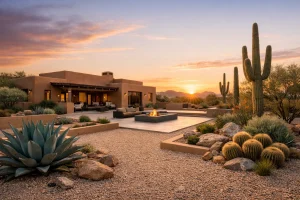
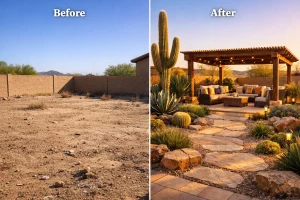
Desert landscaping in Phoenix and San Tan Valley is not about giving up greenery — it is about choosing plants, materials, and layouts that thrive in heat while keeping water use under control. This page of Panorama AZ highlights real-world front yard and backyard ideas that fit the Sonoran Desert climate, from low-water plant palettes to shade structures and hardscapes that stay comfortable all season.
What Desert Landscaping Means for Phoenix Homes
In the Phoenix metro area, “desert landscaping” usually blends visual appeal, low maintenance, and smart water use.
-
Low-water plantings – cacti, succulents, and desert-adapted shrubs that handle heat and drought.
-
Rock, gravel, and decomposed granite – clean, stable groundcovers that replace thirsty turf.
-
Shade and structure – trees, pergolas, and shade sails that make outdoor spaces usable in summer.
For many homeowners, a desert landscape is a way to cut irrigation costs, simplify maintenance, and still keep strong curb appeal.
Key Principles of a Good Desert Landscape
A well-planned desert yard is more than just gravel and a few random plants.
-
Put function first – decide where you need paths, seating, parking, and open views before choosing plants.
-
Work with sun and shade – place shade trees, pergolas, and covered patios where afternoon sun hits hardest.
-
Plan for drainage – use subtle grading, dry creek beds, and swales so monsoon rains have somewhere to go.
These basics help prevent common issues like hot, unusable patios, washed-out beds, and plants that struggle in the wrong exposure.
Popular Desert Landscaping Ideas for Front Yards
Front yards in Phoenix often set the tone for the entire property.
-
Clean gravel fields with accent boulders – a simple base layer with a few large rocks and sculptural plants creates a modern, low-clutter look.
-
Native and desert-adapted plant groupings – agave, yucca, desert spoon, and flowering shrubs grouped by height and color add structure without heavy watering.
-
Low, warm lighting – path and accent lights highlight plants and rocks at night and improve safety for guests.
These elements keep the front yard tidy, low-maintenance, and visually interesting year-round.
Desert-Friendly Backyard Layouts for Real Living
Backyards in Phoenix need to balance hardscape, planting, and shade if you actually want to spend time outside.
-
Zoned layouts – separate areas for dining, lounging, kids’ play, and possibly a pool or spa so each zone feels intentional.
-
Comfort-focused hardscape – pavers, concrete, or tile in lighter, sun-friendly colors that do not hold as much heat as dark surfaces.
-
Layered shade solutions – a mix of trees, pergolas, umbrellas, and shade sails to block different angles of sun throughout the day.
This approach makes it easier to build outdoor living spaces that stay usable beyond just early mornings and late evenings.
Water-Wise Choices That Still Look Green
Desert landscapes do not have to feel barren.
-
Drip irrigation systems deliver water exactly where plants need it while reducing overspray and evaporation.
-
Choosing native or desert-adapted plants means less frequent watering once they are established and better long-term survival.
-
Mixing evergreen structure plants with seasonal bloomers keeps the yard from looking flat or lifeless.
Smart plant and irrigation choices help keep water bills in check without sacrificing a lush, composed look.
When to Bring in a Desert Landscaping Pro
Simple updates like swapping a few plants or adding a small gravel area are often DIY-friendly. For bigger changes — such as full-yard redesigns, new hardscape, or integrating landscapes with pools and outdoor rooms — working with a local desert landscaping professional can save time and rework.
A good starting point is to collect photos of yards you like, note your sun and shade patterns, and list how you want to use your outdoor space. That way, any designer or contractor can shape a plan that fits Phoenix conditions and how you actually live.