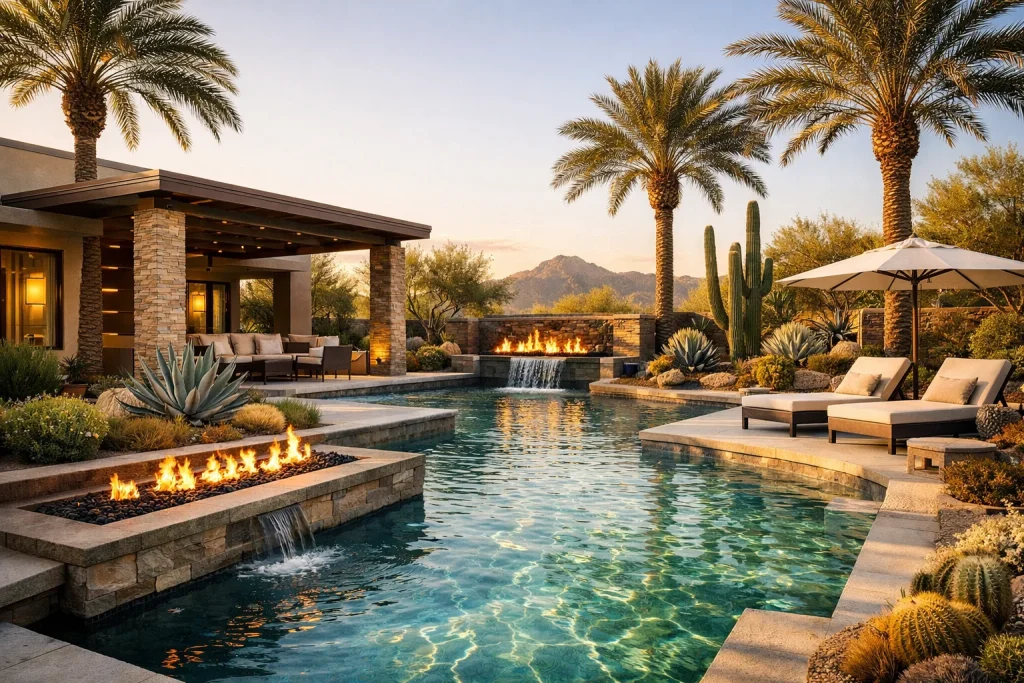
Creating effective outdoor living spaces in Phoenix requires a deep understanding of the Sonoran Desert’s unique conditions. Phoenix outdoor living design must account for extreme heat, limited water resources, and seasonal weather patterns that differ dramatically from other regions. Arizona homeowners face specific challenges when transforming their backyards into functional extensions of their homes—challenges that demand solutions tailored to the desert environment.
For a broader look at how outdoor upgrades fit into local property trends, explore our Phoenix real estate insights hub.
Understanding Phoenix’s Unique Climate Challenges
Phoenix, Arizona experiences one of North America’s most extreme climates, with summer temperatures often exceeding 110°F for extended periods. The Sonoran Desert’s harsh conditions create a baseline reality that all outdoor design must address: intense sun exposure, very low humidity, and minimal annual rainfall.
This climate divides the Phoenix outdoor living calendar into distinct seasons that shape how spaces are used:
- Summer (May–September): Brutal daytime heat makes unprotected outdoor areas difficult to use from late morning through early evening.
- Fall/Spring (October–November, March–April): Ideal outdoor living conditions with comfortable daytime temperatures.
- Winter (December–February): Mild days but cool evenings that often require added warmth.
- Monsoon Season (July–September): Brief but intense thunderstorms bringing wind, dust, and localized flooding.
These seasonal shifts mean Phoenix outdoor living design must balance multiple, sometimes competing needs. Spaces require maximum sun protection during summer while allowing warming sunlight during winter mornings. They need proper drainage for monsoon downpours yet must function during long dry periods.
Water conservation is a critical consideration throughout the year. Effective outdoor living designs in Phoenix increasingly incorporate efficient irrigation, rainwater harvesting, and drought-tolerant plant palettes as standard practice. For a deeper dive into low-water design, see our guide on Phoenix desert landscaping and low-water yards.
The extreme climate also impacts material selection: surfaces exposed to full sun can become dangerously hot, monsoon winds can stress lightweight structures, and prolonged UV exposure accelerates the aging of many synthetic materials.
Essential Elements for Phoenix Outdoor Living Spaces
Creating functional outdoor living areas in Phoenix starts with prioritizing elements that address the desert’s unique challenges. Successful Phoenix outdoor living spaces share core components that work together as a system rather than as isolated upgrades.
If you are planning a full transformation, our step-by-step article Create Your Dream Phoenix Backyard: From Concept to Reality walks through budgets, timelines, and design priorities.
Shade Solutions: The Foundation of Desert Comfort
In Phoenix outdoor living design, shade structures are necessities that determine whether a space remains usable during the hottest months. Effective shade solutions must block intense UV radiation while still allowing air circulation to prevent heat buildup.
Pergolas are one of the most versatile shade options, offering structural integrity with customizable coverage. Traditional wooden pergolas provide partial shade and can support climbing vines, while modern designs often incorporate adjustable louvers or retractable canopies that adapt to changing sun angles throughout the day.
Orientation is critical. Western-facing patios typically require the most robust shade protection, north-facing spaces often benefit from overhead shade that preserves indirect light, and southern exposures need designs that account for seasonal sun shifts.
Popular Shade Solutions in Phoenix
| Shade Solution | Best For | Maintenance | Typical Cost Range | Phoenix Notes |
|---|---|---|---|---|
| Pergolas | Permanent, architectural shade with customizable coverage | Medium (wood) to low (aluminum) | $3,500–$12,000 | Choose heat-resistant materials; wood requires regular sealing against UV exposure. |
| Shade sails | Flexible, modern aesthetics with strong UV protection | Medium (fabric replacement every few years) | $1,200–$5,000 | Must be properly tensioned to handle monsoon winds; seasonal removal may extend lifespan. |
| Retractable awnings | Adjustable coverage for spaces needing seasonal sun | Medium to high | $2,500–$8,000 | Motor and fabric components should be rated for high heat and UV to avoid premature failure. |
| Trees | Natural shade and cooling through evapotranspiration | High (watering, pruning, cleanup) | $200–$1,500+ per tree | Use desert-adapted species; placement can improve both outdoor comfort and home energy efficiency. |
Phoenix Outdoor Kitchen Ideas That Beat the Heat
Outdoor kitchens in Phoenix face unique challenges that demand climate-specific design. Smart planning starts with placement in areas that receive morning sun and afternoon shade, helping appliances and work surfaces stay cooler during peak cooking hours.
Material selection is critical for longevity. Stainless steel grills remain the standard for durability but can become extremely hot when exposed to direct sun. Cabinetry materials like marine-grade polymers or powder-coated aluminum typically outperform traditional wood in desert conditions by resisting warping and fading.
Cooling elements should be integrated into the kitchen layout from the start. Ceiling fans, misting lines, and even refrigerated drawers can create more comfortable microclimates for cooking and entertaining. Efficient work triangles minimize movement between hot cooking zones, cold storage, and prep areas, keeping the cook comfortable during summer evenings.
For costs, timelines, and ROI expectations on bigger backyard projects that often include outdoor kitchens, see our Phoenix backyard transformation guide.
Outdoor Fire Features for Cooler Evenings
While summer heat dominates most conversations about Phoenix outdoor living, winter evenings can be cool enough to justify added warmth. Gas or wood-burning fire pits extend the usability of patios and seating areas throughout the most pleasant months.
Gas fire pits are popular for their convenience and clean burn, especially on no-burn days. Wood-burning options deliver classic ambiance but require more maintenance and awareness of seasonal restrictions. Placement should account for prevailing winds, clearance from structures, and proximity to seating to maximize comfort and safety.
Frequently Asked Questions about Phoenix Outdoor Living
What are the most important elements for a Phoenix outdoor living space?
Shade structures, appropriate hardscape materials, efficient irrigation and drainage, cooling elements like fans or misters, and thoughtful lighting for evening use form the core of a successful Phoenix outdoor living space.
How do I create shade in my Phoenix backyard without blocking views?
Partial-coverage pergolas with adjustable louvers, strategically placed shade sails, architectural screens, and desert trees with high canopies can all provide shade while preserving sightlines and mountain views.
What materials are best for patios in Phoenix’s extreme heat?
Light-colored concrete pavers, travertine, and outdoor-rated porcelain tiles are preferred because they reflect more heat and tend to stay cooler than darker surfaces.
How can I enjoy my outdoor space in Phoenix during summer?
Plan activities for mornings and evenings, layer shade and airflow, integrate misting systems where appropriate, and consider shallow water features that provide evaporative cooling without full pool maintenance.
How much does it cost to build an outdoor kitchen in Phoenix?
Entry-level outdoor kitchens typically start around $6,000–$8,000, with mid-range designs often in the $12,000–$20,000 range. High-end, fully covered kitchens with multiple appliances and seating can exceed $30,000–$50,000.
For more questions about plants, irrigation, and long-term maintenance, visit our Phoenix backyard and desert landscaping FAQ or our detailed guide on turning bare Phoenix yards into comfortable outdoor spaces.