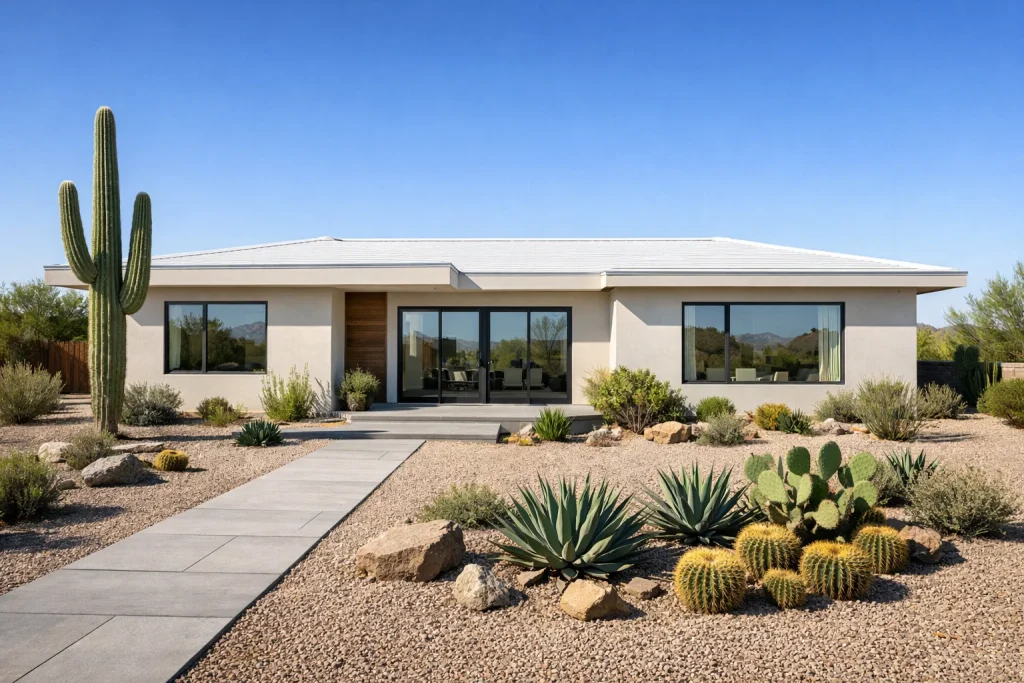
Energy efficiency in Phoenix isn’t a luxury – it’s a financial necessity. With summer temperatures regularly exceeding 115°F and cooling costs representing 40-60% of monthly utility bills, strategic home improvement upgrades deliver measurable savings that directly impact your bottom line.
Unlike mild-climate regions where energy upgrades offer modest benefits, Phoenix homeowners see dramatic results. A properly executed combination of HVAC optimization, window replacement, and insulation improvements can reduce cooling costs by $80-150 monthly – savings that compound year after year.
Why Energy Efficiency Matters More in Phoenix Than Anywhere Else
Phoenix’s extreme climate creates unique challenges. Summer air conditioning runs continuously from May through September, winter heating demands are minimal, and the relentless sun degrades materials faster than in temperate zones.
The Phoenix Energy Reality:
- Average summer cooling bill: $250-400/month for a 2,000 sq ft home
- AC systems cycle on/off 15-20 times daily during peak summer
- Windows account for 25-35% of cooling loss in Arizona homes
- Attic temperatures reach 140-160°F without proper ventilation
- Single-pane windows create thermal transfer equivalent to leaving doors open
Strategic home improvements targeting these specific problems deliver faster ROI than in any other U.S. market. Phoenix homeowners recoup energy upgrade investments in 3-7 years through utility savings alone – before considering increased property value.

HVAC Upgrades: The Foundation of Phoenix Energy Savings
Your air conditioning system is the single largest energy consumer in Arizona homes. Upgrading to modern, high-efficiency equipment delivers immediate and substantial savings.
When to Replace vs. Repair Your Phoenix AC Unit
Replace if:
- System is 12+ years old (efficiency degrades significantly after decade mark)
- Repair costs exceed 50% of replacement value
- SEER rating below 14 (modern units achieve 16-22 SEER)
- Frequent breakdowns during summer months
- Uneven cooling throughout home despite duct adjustments
Repair if:
- Unit is under 8 years old with proper maintenance history
- Single component failure (capacitor, fan motor, thermostat)
- Recent preventative maintenance completed
- System adequately sized for square footage
High-Efficiency HVAC Options for Phoenix Climate
| System Type | Typical Cost | Monthly Savings | Best For |
|---|---|---|---|
| 16 SEER Standard AC | $5,500-$8,000 | $40-60 | Budget-conscious, 1,500-2,000 sq ft |
| 18-20 SEER High-Efficiency | $7,500-$11,000 | $70-100 | Larger homes, maximum savings |
| Variable Speed System | $8,500-$13,000 | $80-120 | Consistent temps, humidity control |
| Dual-Zone Mini-Split | $6,000-$10,000 | $50-80 | Room additions, targeted cooling |
Pro Tip: Schedule HVAC replacement between October-March when contractors offer 15-25% discounts compared to peak summer pricing. Phoenix AC companies are desperate for winter work and negotiate aggressively.
Smart Thermostat Installation – Easy Win for Immediate Savings
Modern programmable thermostats reduce cooling costs by automatically adjusting temperature when you’re away or sleeping. Quality units cost $150-300 installed and deliver $25-40 monthly savings.
Recommended settings for Phoenix homes:
- Home occupied: 76-78°F
- Away during day: 82-84°F
- Sleeping hours: 78-80°F
- Vacation mode: 85-88°F
Every degree above 72°F saves approximately 3-5% on cooling costs. In Phoenix’s extended summer season, this compounds into substantial annual savings.
Window Replacement: Stop Heat Before It Enters Your Home
Windows are where energy efficiency battles are won or lost in Phoenix. Single-pane and older dual-pane windows allow massive heat transfer, forcing AC systems to work overtime.
Window Types Ranked by Phoenix Performance
Best Performers (Maximum Efficiency):
- Low-E Dual-Pane with Argon Fill – Reduces heat gain by 40-50%, blocks 99% UV rays, industry standard for Phoenix new construction
- Triple-Pane Low-E – Ultimate performance but expensive, mainly for extreme west-facing exposures
- Spectrally Selective Tint – Blocks heat while allowing visible light, ideal for south and west windows
Mid-Range Options:
- Standard Dual-Pane – Significant improvement over single-pane but less effective than Low-E coatings
- Tinted Glass – Reduces glare and heat but doesn’t match Low-E performance
Budget Solutions:
- Window Film Application – $3-8 per sq ft installed, blocks 50-70% heat, 5-7 year lifespan
- Cellular Shades – Insulating honeycomb design reduces heat gain 20-30%
- Reflective Screens – External mounting blocks 60-70% solar heat before it hits glass
Window Replacement Cost Reality in Phoenix
| Window Type | Cost Per Window (Installed) | Whole-Home Cost (15 windows) | Annual Savings | Payback Period |
|---|---|---|---|---|
| Standard Dual-Pane | $450-650 | $6,750-9,750 | $350-500 | 14-20 years |
| Low-E Dual-Pane | $550-800 | $8,250-12,000 | $600-850 | 10-14 years |
| Triple-Pane Premium | $800-1,200 | $12,000-18,000 | $750-1,000 | 12-18 years |
Strategic Replacement Approach: Many Phoenix homeowners prioritize west and south-facing windows first – these receive the most intense sun exposure and deliver 60-70% of total window-related energy savings.
Do Shutters and Blinds Actually Help in Phoenix?
Yes, but only specific types designed for heat rejection:
- Exterior Solar Screens – Block 80-90% heat before it reaches glass, most effective solution
- Plantation Shutters (Interior) – Reduce heat gain 15-25% when closed, provide privacy and aesthetics
- Cellular/Honeycomb Shades – Trap air pockets for insulation, effective on east-facing windows
- Standard Blinds/Curtains – Minimal heat reduction (5-10%), primarily for light control

Insulation and Air Sealing: The Hidden Energy Leak
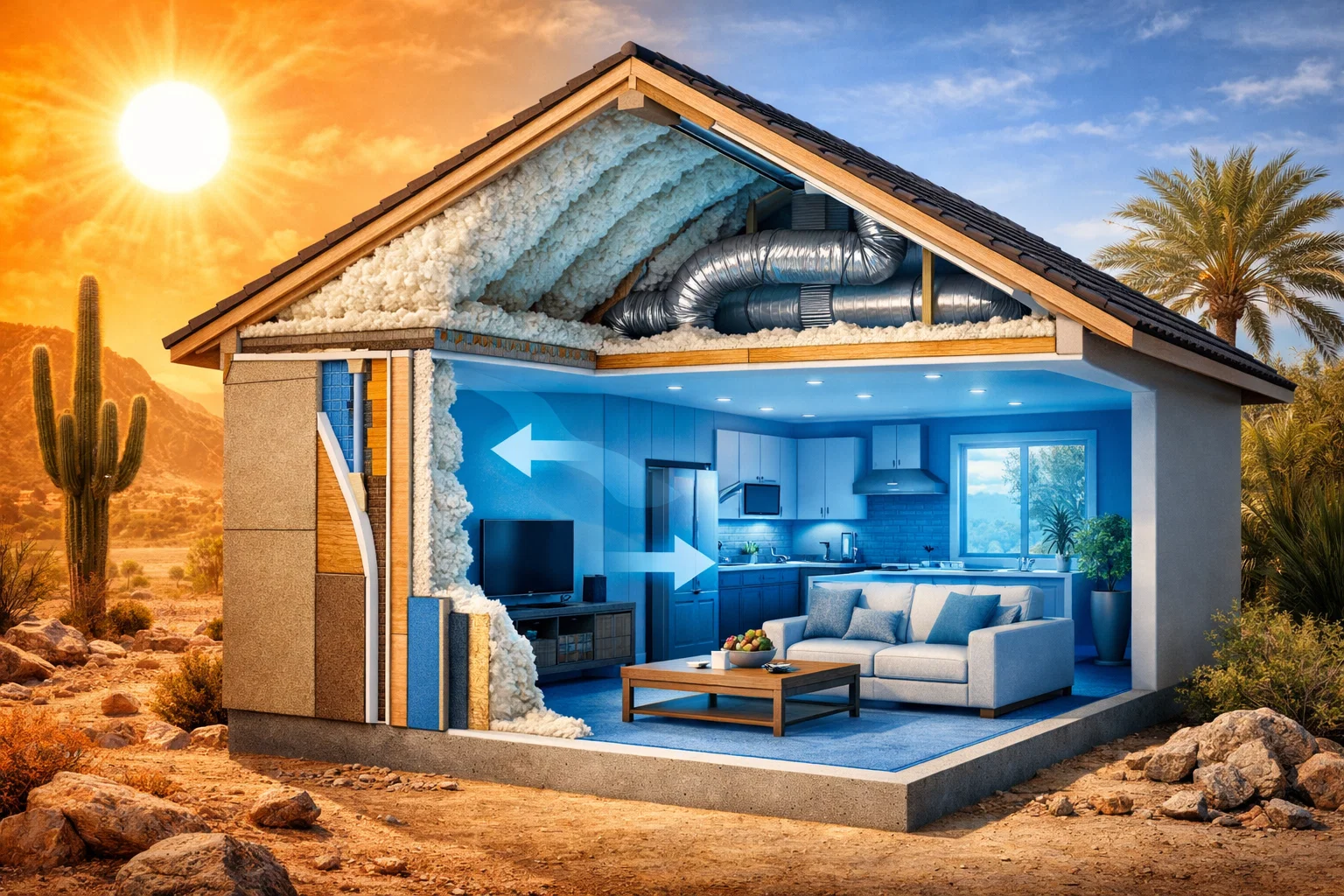
Phoenix attics turn into ovens during summer – temperatures routinely exceed 150°F. Without adequate insulation and ventilation, this superheated air radiates down into living spaces, forcing AC systems to fight an uphill battle.
Attic Insulation Standards for Phoenix Homes
Arizona building code recommends R-38 minimum for attic insulation, but energy efficiency experts suggest R-49 to R-60 for optimal performance in extreme heat.
Insulation Types and Phoenix Performance:
- Blown-in Fiberglass – $1.50-2.50/sq ft, R-value 2.2-2.7 per inch, budget-friendly standard
- Blown-in Cellulose – $1.75-3.00/sq ft, R-value 3.2-3.8 per inch, better fire resistance
- Spray Foam (Closed-Cell) – $3.00-5.00/sq ft, R-value 6.0-7.0 per inch, air sealing included, premium performance
- Radiant Barrier – $0.40-0.80/sq ft, reflects 95% radiant heat, works best combined with traditional insulation
Where Air Leaks Cost You Money in Phoenix Homes
Before adding insulation, seal air leaks – gaps and cracks allow conditioned air to escape and hot air to infiltrate.
Priority sealing locations:
- Attic access hatches (major leak point in 80% of homes)
- Recessed lighting fixtures without IC-rated housings
- Bathroom exhaust fan penetrations
- Electrical outlets on exterior walls
- Gaps around pipes and ductwork entering attic
- Weatherstripping on doors (especially garage entry)
DIY Air Sealing Cost: $150-300 in materials (caulk, foam, weatherstripping) can reduce energy waste by 15-25%. Professional air sealing service costs $800-1,500 for whole-home treatment.
Attic Ventilation – The Forgotten Energy Saver
Proper attic ventilation allows superheated air to escape rather than radiating downward. Phoenix homes need balanced intake (soffit vents) and exhaust (ridge vents or powered fans).
Ventilation improvements:
- Ridge Vent Installation – $400-800, passive airflow along entire roof peak
- Solar Attic Fan – $400-700 installed, powered exhaust without electrical costs
- Soffit Vent Addition – $300-600, ensures adequate intake air
Well-ventilated attics run 15-25°F cooler, reducing heat transfer into living spaces and extending roof lifespan.